Marcus R., laid-off Senior Product ManagerSample Premium Positioning Pack · Marcus R.
Demo
Premium Positioning Pack

The two versions of you, twelve months from now.

Operator twin
Operator

The version of you an employer pays a premium for.

Founder twin
Founder

The version of you who owns the conversation.

Operator Path · The obvious hire
Your Operator portrait

The product director who untangles decade-old code without breaking active revenue

“I help PE-backed vertical SaaS CPOs Decode, De-risk, and Deploy the legacy system rebuilds their exit multiple depends on.. While most product teams freeze the revenue engine to manually untangle old code, I turn a decade of acquired tech debt into a modern stack in half the traditional discovery time.”

It is 9:15 a.m. on a Tuesday, and I am sitting in the boardroom of a newly acquired field service software company, walking the operating partners through a modernization blueprint. We are looking at a 2014-era dispatcher console that currently handles thousands of daily work orders but is too fragile to support a new usage-based pricing model. Instead of telling them we need to freeze feature development for a year to rewrite the core, I am showing them the phased rollout schedule that keeps the revenue engine running while we swap out the foundation.

The heavy lifting happens before the engineering team even sees a ticket. I run the legacy codebase through an automated extraction process that maps a decade of undocumented multi-tenant permissioning rules and pricing edge cases into structured product requirements. This ensures we do not lose the specific logic that cuts average dispatch times from 6.5 minutes to 2.1 minutes, allowing us to cut the traditional discovery phase in half. I am not just writing specifications; I am translating the messy operational reality of field contractors into a clean, modern architecture.

This architectural risk management commands a premium that pure execution roles simply do not. I am earning a base salary of conservatively $200,000, backed by an equity package tied directly to the margin expansion we deliver during this hold cycle. The financial pressure of an eight-month runway is entirely gone, replaced by the certainty of a multi-year value creation plan.

My daily conversations have shifted from sprint velocity debates with engineering leads to margin protection strategies with portfolio operating partners and chief product officers. They rely on me to guarantee that our modernization efforts will actually expand margins rather than just burning through the engineering budget. I act as the governor who ensures the new architecture directly supports the next target of at least $14 million in net new annual revenue.

Twelve months ago, I was displaced because my previous employer decided to automate the ticket-writing process and commoditize the execution layer of product management. Today, I own the strategic architectural decisions that those automated systems rely on to function. I stopped competing on how fast I could draft a specification and started getting paid for ensuring the right system gets built safely.

Daily routine anchor

Tuesday at 9:15 a.m., reviewing an automated business logic extraction report that maps a 2014-era dispatcher console into modern product requirements.

I no longer manage the backlog; I protect the revenue engine during the rebuild.

Founder Path · Owner of the room
Your Founder portrait

The advisor software founders call to safely rewrite their aging platforms

“I help bootstrapped vertical SaaS founders Scope, Sequence, and Ship the core platform rewrite they need to scale.. While most agencies freeze the roadmap for a year of manual discovery, I turn their undocumented business logic into exact migration specs in days so they rebuild the core without breaking the workflows that pay the bills.”

I run an advisory practice that scopes, sequences, and ships core platform rewrites for independent software companies. Instead of freezing their roadmap for a year of manual discovery, I map their undocumented business logic into exact migration specifications in days. I turn the messy operational reality of field service dispatchers into clean, high-margin product requirements that small engineering teams can actually execute.

My clients are founders of field operations software companies who have hit a growth ceiling due to aging infrastructure. They are terrified of the rebuild phase because they know a botched migration kills companies of their size. I step in to provide the architectural oversight they desperately need but cannot afford in a full-time executive, ensuring they modernize without breaking the workflows that generate their current revenue.

I operate on a fractional retainer model, charging at least $8,000 per month per client for a structured discovery and oversight engagement. With a capped roster of four concurrent clients, the practice generates conservatively $32,000 in monthly recurring revenue. This structure allows me to deliver deep, focused value without the overhead of managing a massive agency.

Tuesdays are dedicated to deep technical extraction, mapping legacy codebases to multi-tenant permissioning rules and pricing tiers. Thursdays are reserved for architectural reviews with founders and their lead engineers, translating those findings into phased roadmaps. The rest of the week is spent refining my automated discovery workflows and having quiet, high-leverage conversations with my pipeline of prospective clients.

Twelve months ago, I was a senior product manager whose value was measured by how fast I could write sprint tickets for someone else's roadmap. Today, I am the practice owner founders call to de-risk the most dangerous technical transition their company will ever face. I stopped managing backlogs and started protecting margins.

Consulting positioning

A specialized advisory practice delivering phased legacy modernization roadmaps for founder-owned software companies.

The market does not pay for the volume of product tickets you write, it pays for the magnitude of architectural risk you remove.


Five roles · The rooms your moat fits
1

Director of AI Product Strategy at PE-backed Vertical SaaS

Operating partners at these firms acquire sticky customer bases trapped on aging infrastructure and need a modernization roadmap that protects the revenue engine. The earned context of migrating a legacy dispatcher console to a modern stack while cutting cycle times by 68 percent is the exact risk mitigation they buy. The work uses automated business logic extraction to map undocumented rules before engineering touches the core.

Target companies
FieldEdgeJobberXOi TechnologiesServiceTitan
2

VP of Product Modernization at growth-stage Field Service SaaS

These mid-market platforms hit a growth ceiling when their initial architecture cannot support enterprise-grade multi-tenant permissioning. The mandate requires a product leader who has already navigated the operational reality of high-uptime field operations for hundreds of active customers. Generating conservatively $14 million in net new revenue by tying product rebuilds directly to usage-based pricing proves the modernization phase can expand margins instead of burning cash.

Target companies
Housecall ProWorkWaveSera SystemsCommusoft
3

Head of Pricing & Monetization at transitioning B2B SaaS

Shifting from per-seat to usage-based pricing in field service requires defining the exact operational metric that aligns cost with value. The lived experience of designing the Margin Lens feature and driving 41 percent adoption within six months provides the blueprint for this transition. Modeling the financial risk of new consumption metrics ensures the company captures expansion revenue without alienating the existing user base.

Target companies
TogaiCloudZeroPointFiveMetronome
4

Lead Agentic Workflow Architect at AI-native Operations Platform

Building autonomous systems for field service requires distinguishing between accidental code complexity and mission-critical business logic. The twelve years spent untangling dispatcher workflows and cutting approval cycles from 4.3 days to under a day provides the necessary training data to govern autonomous agents. Orchestrating multi-step workflows ensures the system executes the exact non-obvious rules that keep contractors operational.

Target companies
ProbookMainFuncPlatformrZendesk
5

Principal Modernization Advisor for Bootstrapped SaaS Portfolios

Bootstrapped founders cannot afford a full-time enterprise product chief but desperately need architectural oversight to untangle technical debt. Delivering a phased modernization risk assessment protects their small engineering teams from burnout and prevents the rebuild phase from killing the company. Using automated discovery workflows to map legacy codebases cuts the translation timeline in half, providing a clear path to ship the next product line safely.

Target companies
Surefire LocalKickservPointmanService Fusion
Cover letter · Operator Path

Dear Hiring Manager,

I'm writing to apply for the Director of AI Product Strategy position at [Target Company]. After twelve years inside mid-market B2B software building field operations tooling, I'd bring the architectural risk management your portfolio needs as it modernizes acquired technical debt. The opening caught my attention because the challenge of untangling legacy systems to expand margins is exactly the operational reality I've spent my career navigating.

At Convexa Software, I led the rebuild of a 2014-era dispatcher console from a legacy application to a modern stack, cutting average dispatch time from 6.5 minutes to 2.1 minutes across 340 active customers. My core focus is helping product leaders at scaling B2B software companies protect their gross margins while maximizing expansion revenue during high-stakes architectural transitions. I ensure that when we replace the core system, we preserve the exact, non-obvious business logic—like multi-tenant permissioning—that keeps the lights on and generates conservatively $14 million in net new annual recurring revenue.

Private-equity-backed vertical software companies operate on strict hold cycles, meaning a botched migration kills the investment thesis. As your Director of AI Product Strategy, I step in to scope, sequence, and ship these legacy core migrations without freezing the active revenue engine. I know how to distinguish between accidental code complexity and the mission-critical rules that field service contractors rely on, ensuring the modernization effort actually expands margins instead of just burning engineering budget.

To accelerate this process, I build automated workflows that ingest outdated system documentation and parse legacy codebases to extract undocumented business logic. This approach maps the old architecture directly into structured, phased product requirements for the modern stack, cutting the discovery phase in half and guaranteeing the integrity of the core workflows.

In my first 30 days, I would build an automated modernization risk assessment that ingests your most complex legacy module and outputs a phased, risk-adjusted migration blueprint. If that aligns with your current hold-cycle objectives, I am available for a 30-minute working session to discuss the mechanics.

Sincerely, MARCUS REYES

Résumé rewrite · Operator Path
Target role

Director of AI Product Strategy

AI Product Strategy Director for founder-owned vertical SaaS scaling past $10M ARR.

Twelve years building and modernizing B2B SaaS products for field operations and finance leaders. Specializes in helping founders of bootstrapped vertical SaaS companies ($10M-$30M ARR) untangle aging legacy infrastructure without burning out small engineering teams or pausing active sales. Translates the messy operational reality of field service dispatchers into clean, high-margin software product requirements. Turns outdated codebases and undocumented business logic into modern, AI-ready systems that expand margins and drive measurable annual recurring revenue.

Senior Product Manager
CONVEXA SOFTWARE
2020–2026
  • Rebuilt the core dispatcher console from a 2014-era Backbone application to a modern React stack, cutting average dispatch time per job from 6.5 minutes to 2.1 minutes across 340 active customers.
  • Owned the Field Operations product line through discovery to general availability, converting 28 early-access customers at an average $34,000 ACV and driving a conservatively estimated $14M net new ARR contribution.
  • Shipped a pricing-intelligence feature that analyzed operational margins, securing 41 percent adoption within six months to establish the data foundation for autonomous pricing models.
  • Mapped undocumented legacy business logic into structured product requirements, reducing the discovery phase for architectural migrations and protecting the core revenue engine during the rebuild.
Product Manager
NORTHBROOK ANALYTICS
2017–2020
  • Directed the Embedded Dashboards product lifecycle, scaling the feature line from $1.2M to $4.8M in annual recurring revenue over 30 months.
  • Designed a multi-tenant permissioning model for enterprise scale that successfully survived the company's post-acquisition technical audit.
  • Established the company's first formal user-research program, hiring the initial UX researcher and setting a quarterly discovery cadence that dictated the $4.8M ARR product roadmap.
Signature skills
Legacy system modernization (Backbone to React)Field service operational workflow designUsage-based pricing model architectureMulti-tenant permissioning logicAutomated business logic extractionAI-ready data infrastructure planningMargin expansion strategy for vertical SaaSCross-functional engineering governance

Uses large language models to map legacy system logic and automate migration specifications, cutting the discovery phase of architectural rebuilds in half without losing core business rules.

LinkedIn migration · Industry-expert positioning

Migrate your profile from employee identity to industry expert identity. Click through these six steps in order. Each one names the LinkedIn field, what to do there, and the exact copy to paste.

1
LinkedIn field

Headline

Open profile editor → tap the pencil next to your name → replace the Headline field.

Copy & paste
Legacy system modernization advisor for bootstrapped vertical SaaS founders · ex-Senior PM who migrated a 2014-era dispatcher console to React without breaking the $14M ARR revenue engine
2
LinkedIn field

About

Open the About editor (pencil icon below the headline) → clear the existing About → paste the block below.

Copy & paste
I run a discovery and modernization practice for founders of bootstrapped vertical SaaS companies ($10M-$30M ARR). The unit of work is a phased migration roadmap that untangles aging infrastructure without burning out small engineering teams or pausing the current sales motion.

This practice is built on 12 years of managing product for mid-market field service operations. I spent six of those years migrating a 2014-era Backbone application to a modern React stack. We cut average dispatch time from 6.5 minutes to 2.1 minutes across 340 active customers. That operational reality is what dictates my blueprints today.

A typical engagement starts with mapping the hidden business logic trapped in outdated code. Last month, that meant extracting the exact multi-tenant permissioning rules that keep a field service platform compliant, turning a messy codebase into a clean, modern product requirement document before a single line of new code gets written.

I accelerate this discovery phase by running legacy repositories through automated logic-extraction workflows. The technology maps the syntax and flags the dependencies, but it cannot understand why a specific pricing edge case exists for a legacy multi-tenant customer. I provide the domain grounding that ensures the core business rules survive the translation.

I take on two active advisory retainers at a time. Engagements typically run 4 to 6 weeks, delivering a fixed-scope discovery and sequencing plan. This is not for pre-product founders building zero-to-one; it is strictly for established platforms with active revenue that cannot afford downtime. If your core system is hitting a growth ceiling, we should look at the architecture.
3
LinkedIn field

Featured

Scroll to the Featured section → tap '+' → add a Post or Link. Pin the seed post below. (Once you publish your first kickstart post, replace this with that post.)

Copy & paste
The most dangerous phase of a legacy software rebuild is the discovery phase. If you miss a single multi-tenant permissioning rule from a 2014-era codebase, you break the revenue engine for your biggest customers. Here is the exact framework I use to map hidden business logic before engineering writes a single line of modern code.
4
LinkedIn field

Experience

For each role below, open the existing Experience entry → tap pencil → replace the description with the corresponding block. Do not change company/title/dates.

Copy & paste
CONVEXA SOFTWARE — Senior Product Manager (2020–2026)
Ran the rebuild of the dispatcher console from a 2014-era Backbone app to a modern React stack. We reduced average dispatch time per job from 6.5 minutes to 2.1 minutes across 340 customers while driving $14M in net new ARR. That specific migration risk-management playbook is the foundation of the modernization blueprints I deliver today.

NORTHBROOK ANALYTICS — Product Manager (2017–2020)
Owned Embedded Dashboards, scaling ARR from $1.2M to $4.8M over 30 months. I designed the multi-tenant permissioning model that survived the company's eventual acquisition. Building scalable infrastructure that outlives the immediate team is a core principle of my current advisory practice.
5
LinkedIn field

Skills

Open the Skills editor → remove generic skills (Leadership, Microsoft Office, Communication) → add these 10 in this order. Pin the top 3 (LinkedIn lets you pin 3).

Copy & paste
1. Legacy System Modernization
2. Field Service Operations
3. Multi-Tenant Permissioning
4. Usage-Based Pricing Models
5. Technical Debt Reduction
6. Automated Business Logic Extraction
7. B2B SaaS Margin Expansion
8. Dispatcher Workflow Optimization
9. Product Requirement Sequencing
10. Embedded Analytics Architecture
First two weeks posting plan

LinkedIn rewards posters who post 2-3x per week for the first 6 weeks. Paste the cadence reminder below into a notes app or calendar. The 5 ready-to-publish posts are in your posting_kickstart pack — publish in the order given, one every 2-3 days.

Five ready-to-publish posts to seed your new positioning. Pin them to your Featured section after publishing, or stagger them across two weeks to build a posting rhythm.

Post 1

first-buyer scene

Hook

A bootstrapped founder told me last week that their 10-year-old codebase is the only thing keeping them from doubling their ARR.

Body

They know they need to move off their legacy stack. They also know that freezing their product roadmap for a year to rebuild the core usually kills companies of their size. The engineering team is already stretched thin just keeping the lights on. The bottleneck is never writing the new code. The bottleneck is understanding the old code. Decades of undocumented business logic, pricing edge cases, and multi-tenant permissioning rules are buried in the repository. We spent two hours mapping a phased discovery process. Instead of a massive rewrite, we isolate the specific dispatcher workflows that generate the most friction, extract the logic, and sequence a migration that runs parallel to their active sales motion.

CTA

If you are running a $10M+ SaaS platform on aging infrastructure, what is the specific module you are most afraid to touch?

Post 2

principle the practice repeats

Hook

You cannot modernize a legacy software platform without first mapping the operational reality of the people using it.

Body

Code translation is a commodity. Preserving the exact, non-obvious business logic that keeps your customers' lights on is the actual work. When we migrated a 2014-era dispatcher console to a modern stack, the goal was not just cleaner architecture. The goal was cutting the average dispatch time from 6.5 minutes to 2.1 minutes. We achieved that because we understood the messy daily reality of a field service dispatcher. Every modernization blueprint I build starts with the user's friction points, not the engineering team's tech debt complaints.

CTA

Save this for your next quarterly planning session when the engineering team asks for a six-month feature freeze to rebuild the core.

Post 3

contrarian take

Hook

The worst time to change your pricing model is after you finish a massive system rebuild.

Body

Most vertical SaaS companies treat legacy migration and margin expansion as two separate projects. They spend two years rebuilding the platform, exhaust their engineering budget, and then try to figure out how to charge more for it. This is backward. The migration itself should be the margin expansion event. When you map the old system, you identify the exact workflows where you save the customer the most time. You build the new architecture to meter those specific actions. You transition from flat-fee seat licenses to usage-based pricing on the exact day the new, highly efficient module goes live.

CTA

Tell me what you'd add to this sequence—how do you currently tie technical debt repayment to net new revenue?

Post 4

measurable shift

Hook

We cut the average dispatch time for 340 active field service customers by 68 percent without taking the core system offline.

Body

The old Backbone application took 6.5 minutes to process a single job dispatch. For an HVAC contractor running fifty trucks, that latency was a hard ceiling on their daily revenue. We didn't just rewrite the code in React. We extracted the core multi-tenant permissioning rules, isolated the scheduling logic, and built a sequenced migration plan. The new module dropped the dispatch time to 2.1 minutes. That single architectural shift generated at least $14M in net new ARR because we turned a technical liability into a measurable operational advantage for the end user.

CTA

If you are currently scoping a major technical migration, what is the specific operational metric you are promising the business in return?

Post 5

open question

Hook

Automated code-translation tools are getting incredibly fast at reading legacy repositories, but they still fail at context.

Body

You can run a decade-old codebase through a modern extraction workflow and get a perfectly mapped syntax tree in minutes. It looks like a massive shortcut. But the output rarely tells you why a specific, seemingly irrational pricing rule exists for a legacy enterprise customer. It translates the "what" but completely misses the "why." I spend my time bridging that gap. I use automated extraction to do the heavy lifting, but I rely on a decade of field service product experience to ensure the mission-critical business logic survives the translation.

CTA

For the technical founders in the room, where are you seeing automated code analysis fail when it hits the reality of your oldest customer accounts?

The full Premium Positioning Pack stack
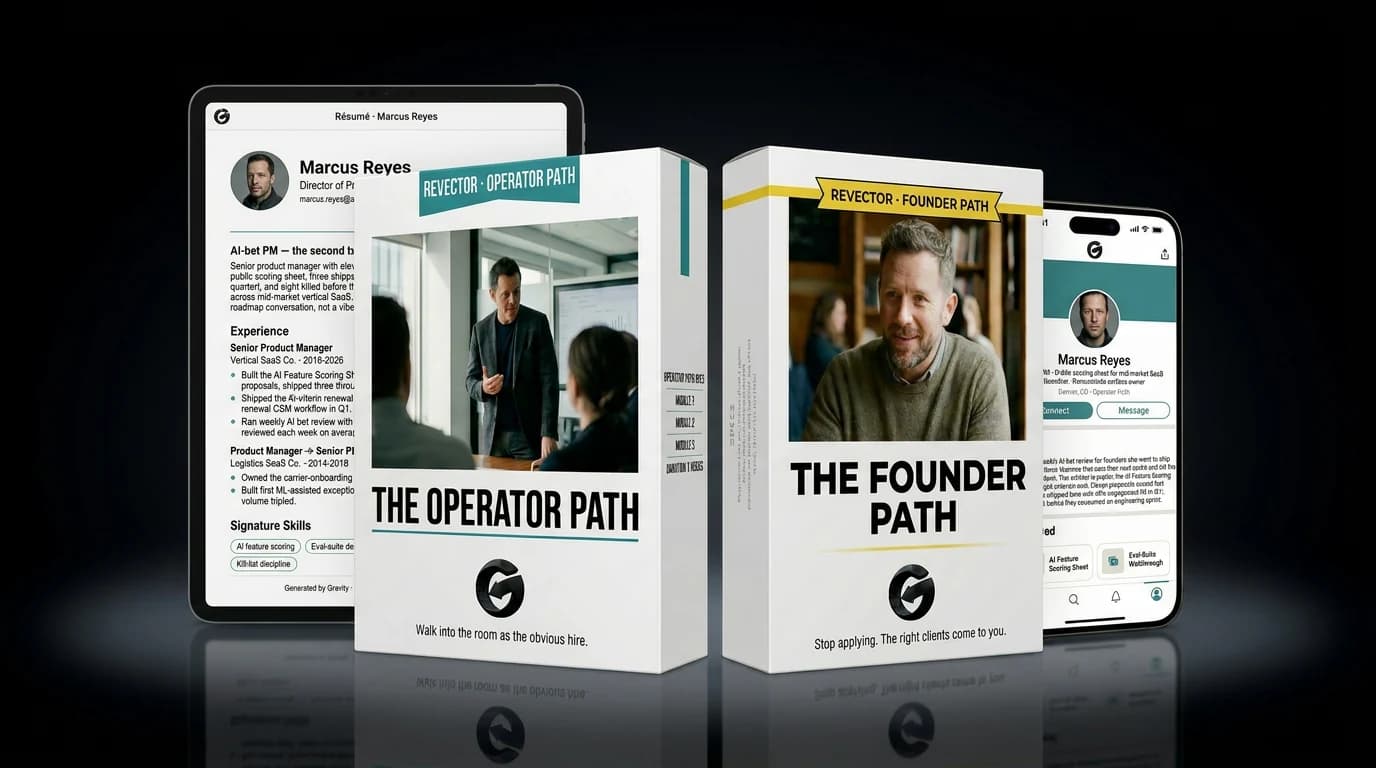
Premium Positioning Pack — product stack
What unlocks at $37
The Operator Path
Walk into the room as the obvious hire. Hiring managers compete for the conversation.
($497 value)
The Founder Path
Stop applying. The right clients start coming to you, ready to pay for premium value.
($497 value)
Résumé ReVector
Land in front of the hiring manager who needs your exact skillsets. Skip the screening pile.
($397 value)
Authority Amplification
Your LinkedIn stops reading like a job hunt. It starts reading like an expert practice.
($297 value)
Total stack value
$1,688
Total pack savings($1,591)
Pack price$97
One time offer$37
You save $60 today. A $1,688 total value

This is what your own Premium Positioning Pack looks like.

Built from your résumé. Same depth, your Operator and Founder Paths.

Amplify my Options for Only $37

Sample Premium Positioning Pack · Your own pack is generated from your résumé and the live market read.